

For decades, the promise of global development was rooted in a simple idea: the world, though unequal, could move forward together. Richer countries would support poorer ones through aid, trade, and investment, not out of charity, but out of shared interest and historical responsibility. However, that tide is shifting with the increased geopolitical tensions in the Middle East and Europe, and the rise of ultra-nationalism in the Western world.
National security has recently become a priority, putting global solidarity in the backseat. In June 2025, NATO countries announced plans to raise military spending to 5% of their GDP within a decade, up from the current 2% benchmark. The United States, once a major advocate of globalisation, has slashed its USAID budget by nearly 90%, a cut of around $60 billion. Across the West, aid budgets are shrinking as defence budgets grow.
Many developing countries are already struggling with rising debt, climate shocks, and fragile health systems. Against that backdrop, such a shift in tides signals more than policy alterations. It marks a turning point.
Every economic decision has an opportunity cost. Increasing military spending inevitably means cutting back elsewhere. Development assistance, which most rich countries already underfund (falling short of the UN’s 0.7% of GNI target), is an easy target. However, the consequences of those cuts are not easy; these could often be life-changing for hundreds of millions of people in the Global South.
Development aid supports basic services that millions rely on in countries across Africa, Asia, and Latin America. Aid fills crucial gaps, from education and clean water to maternal health and disease prevention. When that support disappears, the poorest and most vulnerable suffer most.
Many existing studies have argued why and how development aid harms developing countries. It has sometimes buoyed bad governance in places with weak institutions and corruption. Critics point to cases where aid became a control tool, used to buy influence or impose policies that didn’t fit local needs, establishing a neo-colonial relationship between the centre and periphery in the global geo-politics.
Nevertheless, the evidence contradicting the aforementioned limitations is also aplenty.
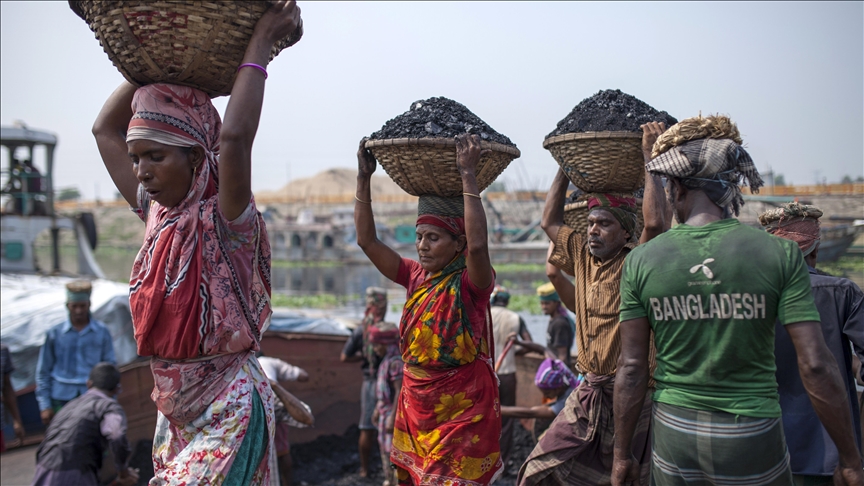
Bangladesh is a good example. In the 1970s, it was dismissed by Henry Kissinger as an “international basket case”, a country supposedly too broken to fix. Yet over the past five decades, Bangladesh has seen remarkable progress. Life expectancy has risen, child mortality has dropped, and millions have been lifted out of poverty.
Development aid played a part in this story. Between 1972 and 2023, Bangladesh received $54 billion from the Development Assistance Committee (DAC) countries through Official Development Assistance (ODA). Over one-third of this aid came from the US, the UK, and Germany.
Such development aids help in many ways. It contributes to generating knowledge, transferring technology, and strengthening education and healthcare structures, among others. ICDDR,B, for instance, a world-renowned health research center in Dhaka, set up with support from USAID in the late 70s, helped pioneer research and treatments that have saved millions of lives worldwide. Since its inception, the center has trained over 27,000 health professionals from 78 countries – one of its many contributions. Or think about the international response to the Rohingya refugee crisis, hosting nearly a million people displaced from Myanmar in Cox’s Bazar, Bangladesh. Without global support, Bangladesh could not have managed this humanitarian challenge alone.
Development assistance is not just about projects or budgets. It’s about building the foundation for a more stable, equitable world. It enables technology transfer, strengthens public institutions, and creates pathways out of poverty. It supports young people with scholarships, empowers women through social programmes, and helps countries prepare for climate change.
And it has spillover effects. As the COVID-19 pandemic showed, public health isn’t local; it’s global. The recent cut in aid is feared to cause hundreds of thousands of children from the poorer countries to miss their immunisations, resulting in life-changing consequences. Diseases don’t stay within borders when vaccine programmes are cut due to aid reductions.
Against these turbulent times, there are a few things that the developing countries can align themselves with. As such, the idea of South-South cooperation (SSC) has long been in discussion. It is high time that the Global South countries boost their collaboration in development. The countries can also focus on a policy to “look East” or strengthen cooperation with alternative sources, such as BRICS and GCC countries. Lastly, there is no alternative to collective dialogues. The developing countries should bring this issue to the UN forum, where the rich countries committed to allocating 0.7% of their GNI as ODA.
The future of development cooperation is at a crossroads. If rich countries retreat from their commitments, they may save money in the short term, but at great cost. The world will become more divided, more fragile, and more prone to crisis.
Development aid is not a handout. It is a shared investment in a future that works for all.