


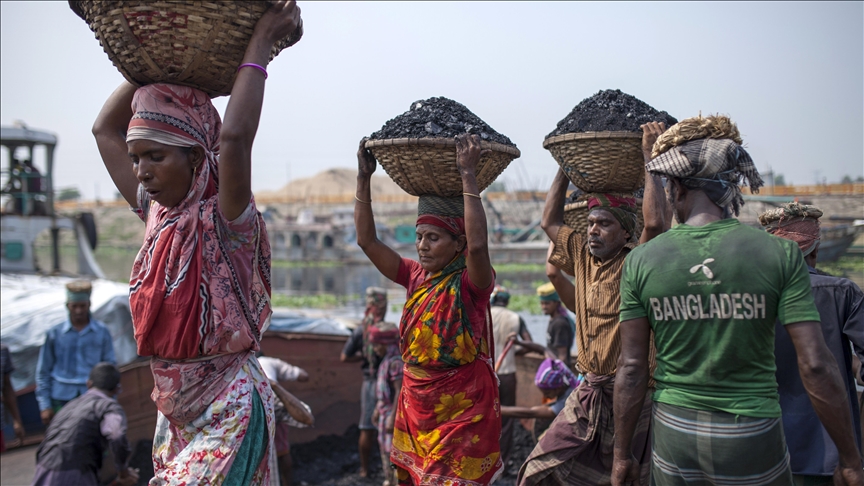
Bangladesh’s external debt doubled since 2017 to stand at approximately $100 billion in 2024. This accelerated growth indicates a significant turn in the country’s economic direction. Most of this borrowing has gone towards financing large-scale infrastructure projects, supported by bilateral and multilateral sources. However, the pace and magnitude of this debt increase are a cause for concern for long-term financial stability. There is apprehension about the ability of the country to repay and service this debt, especially in the face of threats from the prevailing global economic environment, rising interest rates, dwindling concessionary loans, and domestic stressed economic and political situations.
The country’s development spending also increased, mostly in transport, energy, and connectivity. The investment, however, has not yielded the desired returns due to a chain of inefficiencies. In the meantime, the global situation worsened, further taxing the country’s economy. These external pressures, in addition to internal problems, necessitate Bangladesh’s shift towards a more strategic approach to debt management, where borrowed capital is employed effectively and efficiently for the promotion of sustainable growth. Also, emphasis on avoiding mismanagement and corruption will be essential in maximising the economic dividend of foreign borrowings and placing the country’s financial situation on a firm footing.
The debt bubble is ominous with Bangladesh’s narrow export base and heavy reliance on remittance inflows. The country’s main foreign income source, garment exports, has not kept pace with the rising import costs, further adding pressure on the current account deficit. With Bangladesh graduating from its Least Developed Countries (LDC) status, concessional finance will no longer be as readily available as before, and repayment of debt will become that much harder. Dependence on one export sector also makes the economy perilously vulnerable to risk, particularly during uncertain global trading times. However, attempts at export diversification have so far yielded nothing spectacular, and the economy remains vulnerable to external shocks. The remittance flows, as large as they have been, have also been unstable and unpredictable, which has helped to push the financial scene into volatility. Strategic policy measures for dealing with such issues entail reinforcing export diversification, improving investment efficiency, and tapping alternative sources of foreign funding to achieve sustainable economic growth and stability.
The accumulation of debt can badly slow down the government from withstanding economic shocks and confronting crises. With the foreign debt amounting to nearly $100 billion now, the necessity for its thorough tracking as well as evaluating the risk cannot be overemphasised. The country needs a strategic roadmap for ensuring that wisely invested borrowed resources generate sustainable returns. Good debt management requires transparent methods, prudent investment decisions, and continuous scrutiny of debt-servicing capacity. Without these measures, Bangladesh can be led down a debt trap that will limit long-term economic growth and stability.
Grand corruption suspected under the previous administration has been among the reasons for the serious concerns over the projects that have been funded through foreign borrowings. Kickbacks, overspending, and mismanagement were reported in some of the costly development projects. Corruption not only squanders borrowed capital but also warps project quality and economic return. Such misdoings erode debt sustainability even further as they sidetrack resources away from productive employment. Consolidation of control and introduction of a proper Monitoring, Evaluation, and Learning (MEL) framework into future initiatives are most vital to re-establish trust and avail maximum gains from foreign lending.
The misplacement of borrowed capital by corrupt means in Bangladesh’s development is highly distressing. Abuse of borrowed capital deprives the country of economic growth, which can be used to repay its loans. This forms a vicious circle of debt growth with no economic return, increasing fiscal weakness. Fighting corruption needs an all-encompassing framework consisting of robust legal frameworks, oversight, and a vibrant civil society. These ensure that funds are chanelled into projects that genuinely support the economy and people. To achieve sustainable development and not get trapped in a debt trap, Bangladesh has to ensure transparency, accountability, and effective utilisation of borrowed funds. This will assist in building economic resilience, strengthening infrastructure, and eventually lead to long-term, stable growth.
In conclusion, Bangladesh’s escalating external debt, while primarily chanelled into infrastructure, presents a multifaceted challenge to the country’s financial outlook. Navigating this complex landscape requires a concerted effort to fortify the economic bedrock, ensuring that foreign capital genuinely underpins resilient growth rather than perpetuating vulnerabilities. A robust framework centred on prudent fiscal stewardship, diversification beyond narrow export sectors, and unwavering commitment to governance will be paramount for Bangladesh to convert its borrowings into sustained prosperity and secure its long-term financial health. Additionally, addressing inefficiencies in development expenditure and enhancing transparency in project management are crucial steps. Effective use of borrowed funds, coupled with strategic policy reforms, is essential for Bangladesh to avoid falling into a debt trap and achieve stable, sustainable growth.