


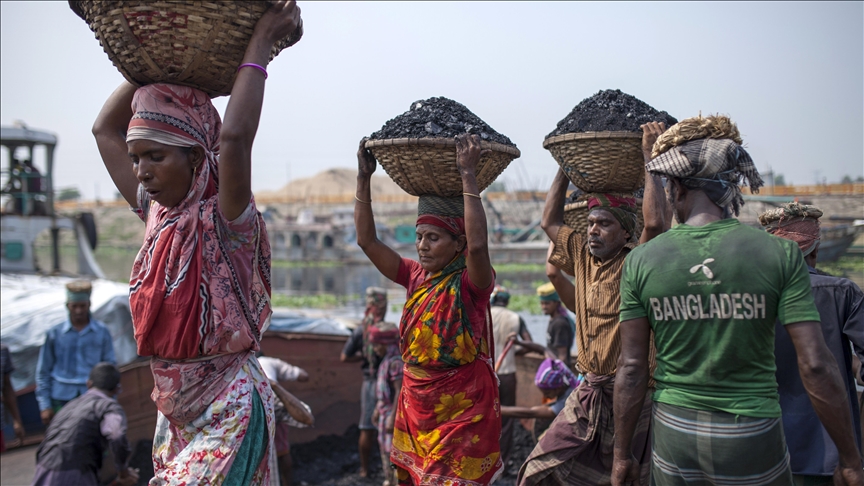
Bangladesh’s poverty rate fell from about half the population in the 1990s to one-fifth by 2019. However, this progress proved fragile. COVID-19 and related measures disrupted jobs, enterprises, remittance flows, and supply chains. Estimates show sharp, temporary poverty increases during 2020–21. Recovery brought poverty down again, but recent signs of stress persist during high inflation and economic tightening. Surveys suggest poverty may now be higher than in 2019, with extreme poverty also rising. While numbers vary, the trend is clear: poverty reduction has slowed, and reversals are becoming more common.
Such recent reversals in Bangladesh’s poverty rates question the country’s celebrated success. There are several reasons why Bangladesh was unable to reduce poverty rates as effectively as it intended, and some of these causes are interconnected. Without addressing one, it is impossible to resolve the other. In other words, the recent rise in poverty rates in Bangladesh failed because the country lacked a comprehensive approach focused on the poor.
A durable poverty-reduction strategy rests on four interconnected pillars. The first is an accurate, credible identification of poor households. Targeted policy is only as good as its ability to locate the intended beneficiaries. Even after decades of policy prescriptions, Bangladesh has failed to establish a fully operational, regularly updated household registry that is usable across programmes. The National Social Security Strategy (NSSS) 2015 envisioned a national household database and systematic tools, including proxy means testing, to support eligibility decisions and reduce arbitrary inclusion and exclusion. Without this foundation, fragmentation persists, and accountability is weak.
Secondly, it must ensure that the poor receive the same education and skills as the non-poor. This might require more schools and infrastructure in pro-poor regions. Additionally, these households need social security support. This is because the poor often face several preconditions – such as having fewer resources to spend after education, healthcare, and other essentials. The marginal utility of money is much higher for the poor than for the non-poor: i.e., the same $1 would mean much more to the poor than to the non-poor. It also means that, compared to non-poor people, the poor would value present consumption more than future consumption, a phenomenon in economics known as the time value of money. Therefore, poor households tend to invest less in human capital (such as education or healthcare) than non-poor households. This is why social security transfers are so valuable for sustainably reducing poverty rates. Bangladesh’s public policy has not consistently matched these realities. Regions with entrenched poverty face gaps in school quality, teacher availability, healthcare access, and basic infrastructure. Social protection programmes often fall short in both coverage and adequacy. Studies and administrative reviews repeatedly point to significant targeting errors, where benefits leak to non-poor households while eligible poor households remain excluded. At the same time, benefit levels have frequently been too small or too irregular to offer meaningful protection against rising living costs.
The third pillar is the labour market, specifically the creation of decent, productive jobs at scale, which Bangladesh failed to achieve. Bangladesh’s large labour force is still dominated by informal employment. Of the 70 million employed workforce in 2022, only 15% were in the formal sector. Unlike the East Asian comparators, Bangladesh’s industrial employment growth was far slower. Garments have powered Bangladesh’s growth story, but the same concentration has left the economy less diversified than it needs to be. When industrial growth is narrow, the demand for semi-skilled labour is weaker, rural-to-urban mobility yields smaller productivity gains, and many migrants end up in low-paid services and manual work with limited chances for occupational mobility.
The final pillar that Bangladesh missed was effective governance and coherent policies. Due to corruption, low moral standards, and bureaucratic complexity, poor people had limited access to quality education and healthcare, as well as to migration, social security, and other services. For example, international migration channels were controlled by political elites who charged high fees, artificially barring poor households. The elites also captured the banking sector, leading to an increase in non-performing loans. It was more expensive for the poor to access loans. Bangladesh also failed to take timely actions to reduce inflation and implement effective education and training policies aligned with global trends.
These weaknesses explain why Bangladesh lifted many out of poverty but didn’t build a thick buffer. A large, vulnerable group, living within about 1.25 times the poverty line, remains exposed to shocks. Urgency to address this is rising. While Bangladesh benefits from a demographic dividend, ageing population will increase demand for healthcare and support. Environmental stress, pollution, food safety issues, and antimicrobial resistance will add to health burdens. Acting now is cheaper than later.
To address these challenges, Bangladesh needs coherent and timely policy action. It requires an integrated household registry with transparent eligibility criteria, regular updates, and credible grievance mechanisms, which should be utilised across programmes. The focus should be on improving quality in schools and healthcare in lagging regions, not only through infrastructure but also through staffing, learning outcomes, and accountability. Modernising the curriculum and expanding credible technical and vocational pathways are essential. Social protection must be consolidated, better targeted, and funded at levels that effectively safeguard living standards during shocks. In terms of employment, the priority is diversifying beyond garments, creating a more predictable business environment, reducing trade and regulatory hurdles, improving logistics, and aligning skills policies with market demand. Governance reforms that reinforce the rule of law and financial discipline, and that expand fair access to services such as credit and safe migration channels, should also be prioritised.
International experience, including China’s scale of poverty reduction, points to a simple lesson. Durable progress comes from combining targeted support with structural change and consistent implementation. If Bangladesh acts with urgency and focus, it can protect past gains and restore steady poverty reduction. If it does not, reversals will become more frequent, vulnerability will deepen, and the risk of a prolonged middle-income trap will rise.