


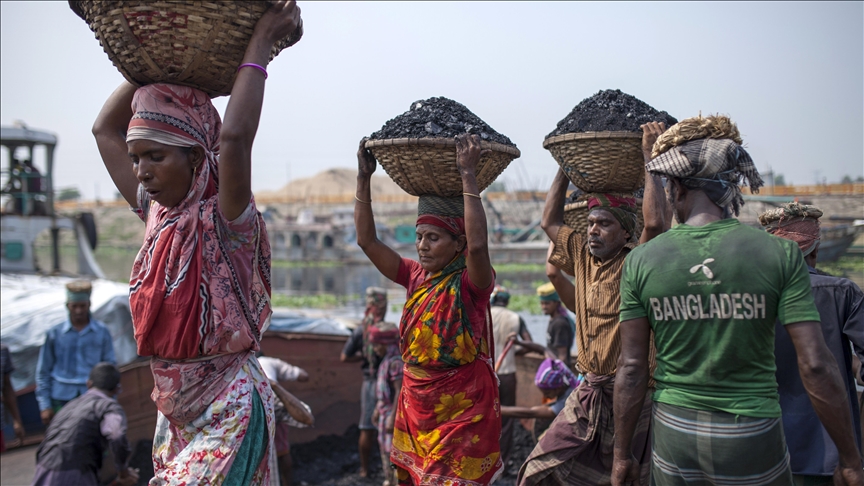
Bangladesh has been going through a demographic window of opportunity since 1991 but is yet to reap its potential benefits. The national unemployment rate, which is around 3.5 per cent according to the Quarterly Labour Force Survey (QLFS) 2022, might indicate Bangladesh doing well in employment generation, notable disparity exists across different age groups, education levels and types of employment. For instance, youth unemployment is thrice as much as the national rate, with the highest unemployment rate among graduates. Educated youths suffer the most as they are overqualified for low-tier jobs and cursed by the scarcity of medium to high-tier market jobs. This leads them into the dilemma of entering low-tier jobs or remaining jobless and trying to secure traditional employment repeatedly. In this scenario, self-employment and entrepreneurship can be a way out for the youths and people in general, who are either unemployed or not satisfied with their current job opportunities.
Additionally, many females in the country work as contributing family workers, especially in rural areas compared to males. For these females burdened with care work, self-employment can be a suitable pathway to gain economic independence along with their care work and other responsibilities. Nowadays, self-employment is considered a choice-based decision and it is becoming more attractive to people who believe their wage work value is low and they have more autonomy and flexibility in entrepreneurship.
Given this context, we examined the demographic, socio-economic and regional factors which might influence individuals’ decisions to pursue self-employment over unpaid labour. To do this, we used QLFS 2022 to estimate the relative risk ratios (RRRs) from a Multinomial Logit Model. In this setting, our dependent variable was employment status which includes four types of employment such as unpaid workers, own account workers (self-employment), employers and wage workers, with unpaid work as the reference category. Therefore, the RRRs represent the risk of an individual being in one of the employment categories relative to unpaid labour.
The results revealed that age, education, and household wealth significantly increase the relative risk of choosing self-employment over unpaid labour. With the increase in age, older individuals are more likely to be shifted to self-employment. Compared to males, females are less likely to have any paid employment highlighting the structural barriers faced by females’ employment opportunities. For instance, as opposed to males, the risk of an individual being female is 0.400 times less likely to become self-employed and 0.170 times less likely to become an employer. This indicates that unpaid labour is still the dominant employment form for many females, limiting their economic independence.
Marital status also plays an important role, with married individuals more likely to transition to self-employment, but showing no significant effect on wage employment. This suggests that marital responsibilities push individuals toward entrepreneurship but do not necessarily promote wage employment. Education emerges as a key driver of entrepreneurship. Compared to individuals with no education, those with tertiary education have a relative risk of becoming an employer that is 6.788 times higher, while individuals with secondary education have a relative risk of becoming self-employed that is 2.152 times higher. Higher education fosters the skills and opportunity recognition necessary for entrepreneurial success.
Being the head of a household strongly influences self-employment, with household heads having a relative risk of 15.693 times higher for pursuing self-employment and a relative risk of 19.013 times higher for becoming employers. This is likely due to their financial responsibilities, which push them toward income-generating activities. Wealthier individuals have a relative risk of 9.493 times higher for becoming employers, suggesting that wealth facilitates risk-taking in entrepreneurship. Land ownership shows a negative correlation with all employment categories, indicating that individuals with substantial landholdings may prioritise unpaid labour or agriculture.
Urban residency significantly increases the relative risk of both self-employment and wage employment, reflecting better access to opportunities in urban areas. There are regional disparities as well, with individuals from Barishal, Chattogram, and Khulna being more likely to be self-employed or employers compared to those in Dhaka. In contrast, Rajshahi and Rangpur show negative associations with economic independence.
The findings highlight the need to address gender and regional disparities in access to self-employment opportunities. Policymakers should focus on supporting women entrepreneurs through initiatives such as microfinancing, skill development, and affordable childcare to increase their participation in self-employment. Reducing the urban-rural divide through investments in rural infrastructure and digital connectivity could also enhance access to urban markets and digital employment. Expanding vocational training and higher education opportunities across regions would further prepare individuals for entrepreneurial roles. Inclusive policies are vital to fostering a balanced labour market, driving economic growth, and reducing dependence on unpaid labour.
This article was first published in the February, 2025 edition of the Thinking Aloud