


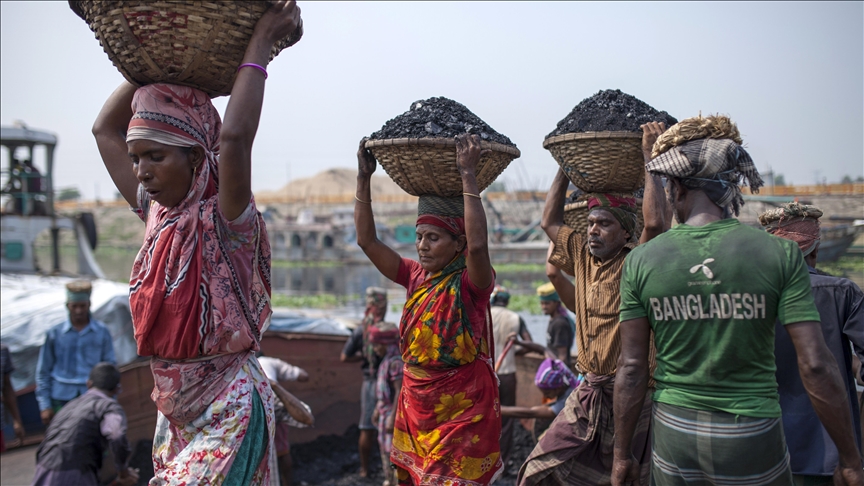
Bangladesh’s economy has witnessed remarkable growth, solidifying it as one of the fastest-growing economies worldwide. According to Bangladesh Economic Review 2023, the construction sector significantly contributes to this growth, accounting for approximately 6.41% of the GDP growth rate in 2023. The sector’s share within the broad industry in GDP at constant prices rose to 9.55% in FY 2022-23, up from 8.19% in FY 2015-16. The construction sector’s growth rate increased to 8.71% in FY 2021-22, compared to 8.08% in FY 2020-21.
As the construction industry expands, it demands more labour. According to the LFS 2022 report, construction is the fifth-largest industry in terms of employment in Bangladesh, with about 5.44% of the employed population working in this sector. A study conducted by BIDS projects that the construction industry in Bangladesh is expected to require approximately 9 million workers by 2030. But among the top five employment-generating industries, the construction sector ranks second to last in terms of female employment. Only 0.4% of women are employed in this sector, compared to 8.18% of men. With female labour force participation in Bangladesh increasing from 36.3% in 2016/17 to 42.7% in 2022, the expanding construction sector presents a significant opportunity to accommodate more female workers.
Additionally, with the country’s LDC graduation and the anticipated decline in RMG exports, exploring sectors like construction is crucial for accommodating the expected structural shift in labour dynamics. Also, the rise of automation and Fourth Industrial Revolution (4IR) technology highlights the need to focus on technology and skill-based occupations for women.
According to the Labour Force Survey 2016-17, females in the construction sector are primarily concentrated in lower-tier jobs: 31.23% as civil engineering labourers, 22.15% as building construction workers, and 18.27% as bricklayers. Also, studies found that many women work in senior management and administrative roles, accounting for approximately 7.1% and 4.3% of total female employment in the sector, respectively. Across all occupations, most female workers are either unskilled (53%) or semi-skilled (17%). According to the employers, female workers are considered less productive than males according to CISC Employers survey 2018 and 2020 findings.
The construction sector is highly informal, 78.42% of female workers are employed under verbal agreements. Only 0.3% of female employees have access to toilets and sanitation facilities, and 1.88% have maternity leave benefits. This sector is inherently hazardous due to the nature of its work and only 1% of female workers have access to safety gear. Additionally, just 0.78% receive transportation and food subsidies, and 0.66% benefit from daycare facilities.
Despite policies to boost women’s participation in the labour force, there are no gender-specific policies in construction. The Public Procurement Rule, 2008, and Occupational Health and Safety Policy, 2013 ensure workplace safety but lack gender provisions. The Bangladesh Labour Law addresses critical women’s issues like hygiene, maternity leave, medical facilities, and working hours, but enforcement is challenging in informal sectors like construction.
Women are largely confined to unskilled jobs like brick breaking and excavation due to a substantial skill gap and lack of access to training programs. The sector’s high informality, characterized by irregular recruitment, work hours, and payment methods, limits job stability. Additionally, mobility and transportation issues, coupled with inadequate on-site infrastructure and security concerns, deter women from long-term roles. The work environment is often abusive, with frequent conduct violations, resistance to female leadership, and harassment. Unsafe conditions and inadequate accommodations, such as the lack of separate bathrooms and resting areas, further exacerbate these difficulties. Gender-based violence, including sexual harassment and physical assault, is significant with limited avenues for complaint. Wage exploitation is prevalent, with female workers often paid less than their male counterparts for similar work. Societal norms and gender bias further discourage female participation, with industry stakeholders perceiving women as less productive and costlier due to additional safety and security needs. Barriers related to marriage, pregnancy, and care work, combined with a lack of role models and representation in workers’ unions, further limit women’s opportunities and perpetuate their marginalization in the construction sector.
To increase female participation and to create a more inclusive environment in the construction industry several essential actions should be undertaken to overcome the challenges. Firstly, establishing a comprehensive workforce database, gradually formalizing the sector through structured recruitment, fair wages, standard work hours, proper implementation of well-defined health, safety, and compensation policies, and an institutional body addressing workplace abuse and harassment are crucial. Secondly, promoting female participation through skill-training incentives and create a gender-responsive ecosystem with standard wages, safety measures, maternity benefits, and flexible work hours are also extremely important. Ensuring that training programs include 30% female participation as mandated by the government and declaring minimum wages for entry-level jobs should be considered. Thirdly, streamlining the labour hiring processes for contractors and subcontractors, maintaining a worker database with National ID numbers to identify wage gaps, and adding specific clauses to labour laws addressing construction sector related concerns are vital. The Ministry of Women and Children should play a significant role in this regard, with private associations like BACI and labour organizations advocating for workers’ needs. Fourthly, state-owned insurance companies should offer injury packages.
The construction sector has the potential to increase female workforce participation, ensuring gender parity and aligning with SDG goals (SDG 1, 5, and 8). Occupations in this sector are predominantly male-centric across all tiers underscoring gender bias and stigma, necessitating considerable attention by the Government and policymakers. Implementing the above recommendations can help to make the construction sector a leading example of gender parity and inclusivity, driving sustainable development and economic progress in Bangladesh.