


Though there are many views on ‘inclusive growth’, the key consensus is that inclusive growth is a growth process that reduces poverty, inequality, and social exclusion and promotes ‘decent’ jobs and economic and social cohesion. A ‘decent’ job is referred to as a productive job for women and men in conditions of freedom, equality, security and human dignity. It also involves opportunities for work that deliver a fair income, provides security in the workplace and social protection for workers and their families (ILO, 2011, Working with the ILO – Decent Work and System Wide Coherence, Geneva).
The economy of the country had been growing at a rate of above five percent over the last two decades. There are arguments that such growth in Bangladesh has been largely ‘inclusive’ in nature and that Bangladesh has been successful in generating ‘good’ jobs by improving farm-non-farm, rural-urban inter-industry inter-sectoral labour mobility at a relatively low skill level that had poverty-reducing and social cohesion enhancing effects (Mahabub Hossain, Binayak Sen, and Yasuyuki Sawada, 2012, Jobs, Growth and Development: Making of the “Other” Bangladesh, WDR 2013 Background Paper). Such claims demand careful examination as it is not clear what the definition of ‘good’ job is in the context of Bangladesh’s economy. It is equally important to understand what needs to be done in the transition toward a regime of ‘decent’ jobs.
‘Decent’ jobs should be regarded as a dynamic and progressive phenomenon. There could be three stages for moving toward attaining a ‘decent’ job. The first stage is the ‘good-enough’ job which shows the transition from no job to job or from unpaid family job to paid-job. The second stage is the ‘good’ job which shows the transition from ‘good-enough’ job to job with better return, formal job security and enhanced workers’ rights. The third stage is the ‘decent’ job, which is the transition from ‘good’ job to a state of productive employment in compliance with agreed international standards of the working environment and workers’ rights.
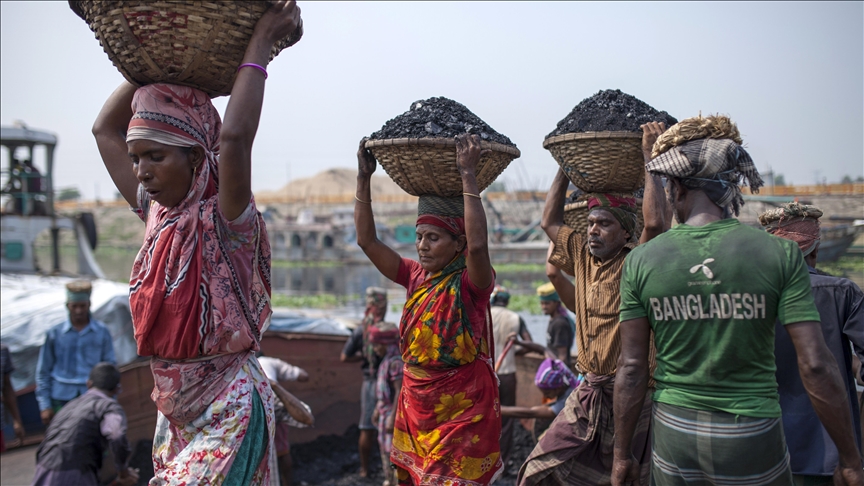
Apart from the RMG, employment in all other sectors has largely been for men and mostly informal in nature. A rise in employment in agriculture, both in the crop and non-crop sectors, has been associated with agricultural growth and a rise in the agricultural real wage, with virtually no progress towards ‘good’ jobs. Rise in employment in the rural non-farm and urban informal sectors has also happened without much progress towards the creation of ‘good’ jobs in these sectors. For men, such expansion has helped them to move out from unemployment or unpaid family labour to ‘good-enough’ jobs. For women, employment in the RMG sector, in most cases, is a manifestation of the transition from no labour force participation or unpaid family jobs to paid-jobs. Such paid-jobs in most of the RMG factories are largely ‘good-enough’ in nature, which however has also contributed to the reduction in poverty and generating growth in Bangladesh.
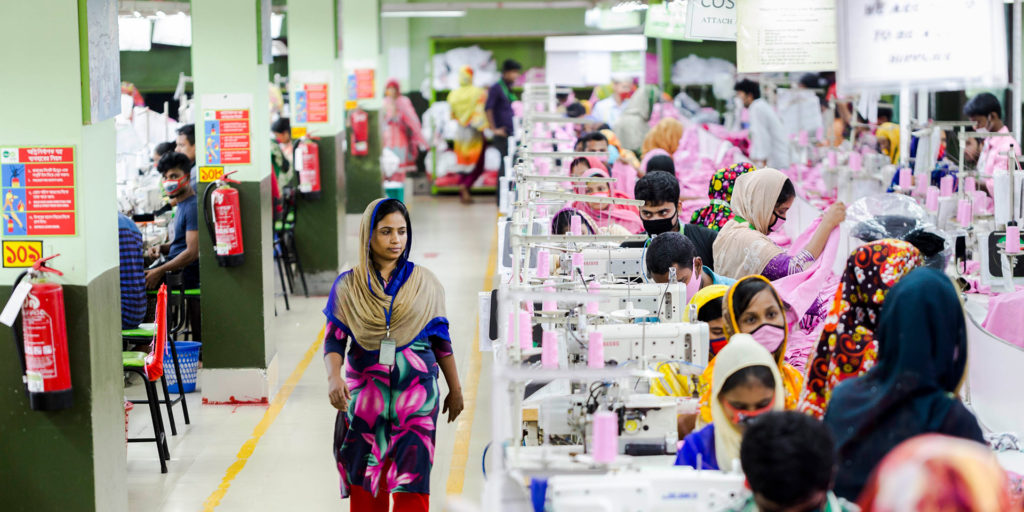
It is equally important to understand the quality of structural transformation that has happened in the process of economic growth in Bangladesh. Though the share of the industrial sector in GDP has increased from around 20 percent in the early 1990s to around 30 percent by late 2000s, with a simultaneous reduction in the share of the agricultural sector, there is still a long way to go for the creation of large scale ‘good’ jobs in the urban sectors. This will require both quantitative and qualitative changes in the current pattern of structural transformation of the economy. The economy is yet to have a strong and diversified manufacturing base, which requires supporting macroeconomic, trade and industrial policies and removal of policy-induced and supply-side constraints.
In the near future, for the promotion of inclusive growth, the challenge of Bangladesh’s economy is how to transition from the current state of ‘good-enough’ jobs to large scale ‘good’ jobs. In the medium to long term, the prospect of inclusive growth in Bangladesh would depend on how the growth momentum would be able to generate a successful transition toward a state of ‘decent’ job.