


Do the official inflation figures in Bangladesh reflect the actual inflation faced by the marginalised households in Bangladesh?
The Bangladesh Bureau of Statistics (BBS) calculates the official inflation rates in Bangladesh. The BBS constructs Consumer Price Indices (CPIs) for national, rural, and urban areas, and calculates inflation rates for these areas using the respective CPIs. The reference groups of the constructed CPIs are the average urban and rural households of Bangladesh. The consumption patterns of these households are derived from the Household Income and Expenditure Survey (HIES) of 2005-06. In the urban consumer basket, 422 commodities are included, while the rural basket consists of 318 food and non-food items. Using the data of HIES 2005-06, the BBS derives the weights of items in the baskets based on the average expenditure incurred by a household on the item expressed in terms of its percentage share in the total expenditure on all items.
There are two major concerns related to the process of estimation of CPIs and inflation by the BBS. First, it is difficult to understand why the BBS is still using the 2005-06 HIES data to derive the weights of the items in the consumption baskets whereas the latest HIES 2016 data has been available since 2017. It is quite reasonable to argue that the food habits of the people in Bangladesh (both poor and nonpoor) have changed over the years since 2005-06. However, changes in food habits are not addressed while calculating the CPI by the BBS. Second, and more importantly, the CPIs, calculated by BBS, hardly reflect the inflation faced by low-income households in Bangladesh, both in the urban and rural areas. The average consumption baskets used by the BBS to calculate the CPIs are not truly representative of the consumption pattern of many low-income households.
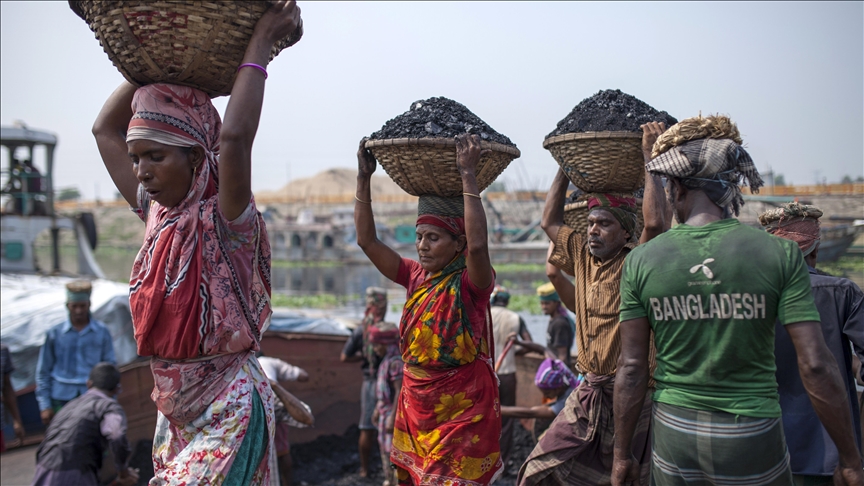
Therefore, the official figures of inflation do not reflect the real scenarios of the stress of the marginalised households in the wake of the price hike. In this exercise, we offer an alternative estimation of the inflation rates for the marginalised households in Bangladesh. We have identified eight marginalised household groups in Bangladesh who are vulnerable to food insecurity due to the price hike of essential food items. In the urban areas, these household groups are readymade garment (RMG) workers, day labourers, rickshaw/van-pullers, and small traders. In the rural areas, these groups include landless farmers, day labourers, rickshaw/van-pullers, and small traders.
We have constructed CPIs for each household group by using the detailed and disaggregated data of the nationwide survey of 10,500 households conducted by SANEM and the GED of Planning Commission of Bangladesh in 2018. From this survey data, typical food consumption baskets of these eight household groups are constructed, and respective weights of items in the food baskets are calculated. Using these food baskets, the monthly point-to-point food price indices and food inflation rates are calculated based on retail price data collected by the Department of Agricultural Marketing, Ministry of Agriculture, and the Trading Corporation of Bangladesh (TCB). The results are striking!
First, food consumption baskets of the selected marginalised household groups are concentrated on much smaller items than the food basket used by the BBS.
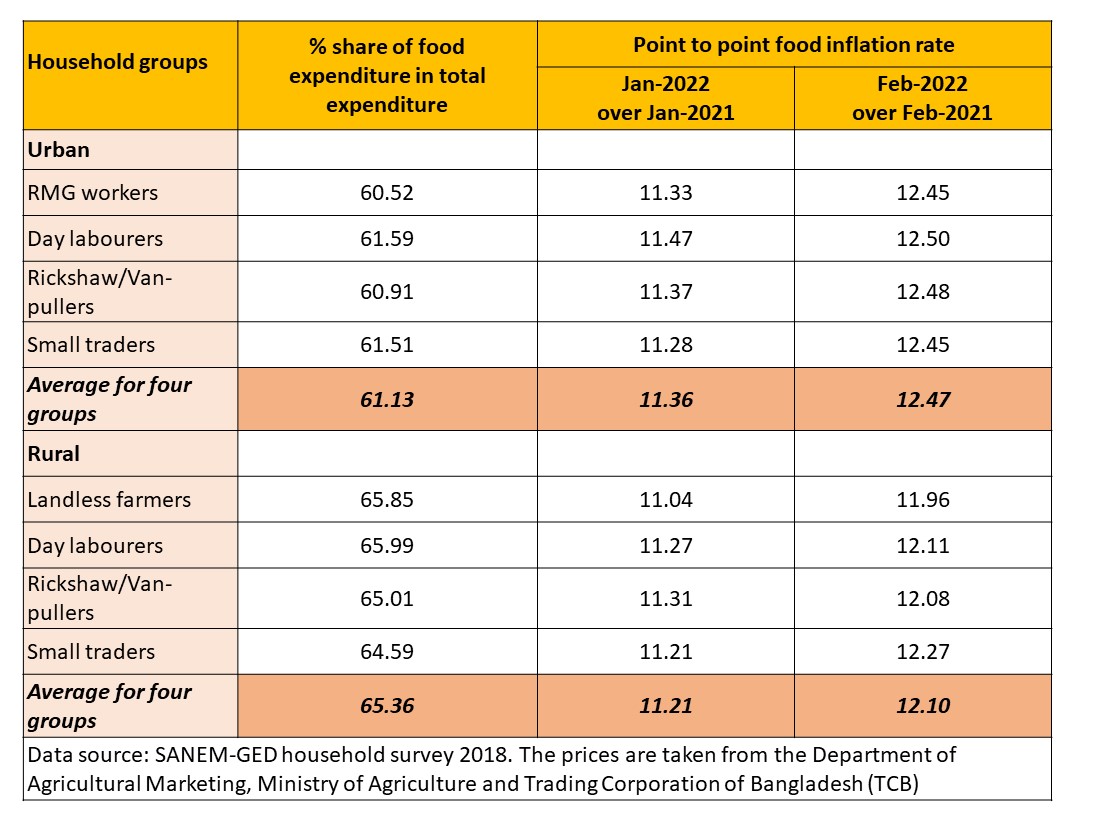
Second, the average food consumption is 61.13% of the total consumption expenditure of the urban marginalised household groups and 65.36% of the total consumption expenditure of the rural household groups under consideration, which are much higher than the food shares used by the BBS in their CPI calculation: 45.17% for the urban areas and 58.54% for the rural areas.
Third, the calculated average food inflation rates in February 2022 for the marginalised households under consideration in the urban and rural areas are 12.47% and 12.10%, respectively. In January 2022, these figures for the urban and rural areas were 11.36% and 11.21%, respectively. This suggests that not only the food inflation rates have increased in February, but the rates are also much higher than the official inflation figures. For example, in January 2022, according to the BBS, the food inflation rates for the urban and rural areas were 4.85% and 5.94%, respectively. However, our estimation suggests that the marginalised households in Bangladesh are facing food inflation rates that are more than two times the officially reported food inflation rates.
Inflation is the “cruellest tax” for marginalised people. Our analysis shows that the officially reported food inflation figures are grossly underestimating the actual food inflation faced by the marginalised households in Bangladesh. Due to the high reliance on the necessary food items, poor people cannot cut down on necessities and are hit the hardest by soaring prices of necessities. The policymaking process needs to address this concern with the utmost priority.
The article was published at Thinking Aloud on 1 March 2022.