


India aims to achieve US$5 trillion in GDP soon. Yet, there is an active debate on people’s standards of living, inequality and lack of employment in the country. The question is, whether the quest for high growth is sustainable when large numbers in the population are not partners in this growth process?
The poverty rate seen through the Multidimensional Poverty Index (MPI) measure in the country was about 14.9% in 2019-21. There were large variations seen though: Bihar and Jharkhand show numbers near 30%, while some states in the Northeast, the South, Punjab, Delhi, and UTs showed a poverty rate below 5%. The Coefficient of Variation in poverty rates across states is about 60% – a figure too high, seen both from economic and political points of view. Also, it does not stand forth with SDG 1 and SDG 10.
A close association is also seen between the poverty rate and the Total Fertility Rate (TFR), which implies that low poverty and mass education and health are coterminous; educated and healthy parents would prefer small families.
A recent report on the Global Gridded Relative Deprivation Index combines the various components of MPI with satellite-image-derived data. These data show that compared to global standards, the standards of living are rather low in India. The only consolations are the small specs of low deprivation seen in Delhi, Mumbai and Chandigarh; elsewhere, the deprivation numbers are well above 50%.
Trends in inequality in incomes at the all-India level through the last 70 years show that the top 10% rich have become richer since about the mid/late 1980s. The economic liberalisation has helped them. The bottom 50% have lost their share. Have those at the bottom lost on absolute incomes? The real wage rates in agriculture or factory workers show that there has been some marginal increase in the wage rates in some states and no real decrease anywhere. The rich have become richer but the poor have just about maintained their standards of living.
The widening inequality in incomes is also reflected in the widening of asset distribution. The share of the bottom 50% households has fallen from 12.3% in 1960-61 to 6.1% in 2019-20, a reduction by half. At the same time the share of wealth owned by the top 10% rose from 43.2% to 63.2%.
Incomes data for 2019-20 show that Telangana and Jammu and Kashmir had an average monthly income more than 40% above the all-India average while at the other end, Jharkhand, Chhattisgarh and Bihar showed monthly incomes close to 40% below the average. Among the Northeast states, Sikkim’s income was twice the all-India level.
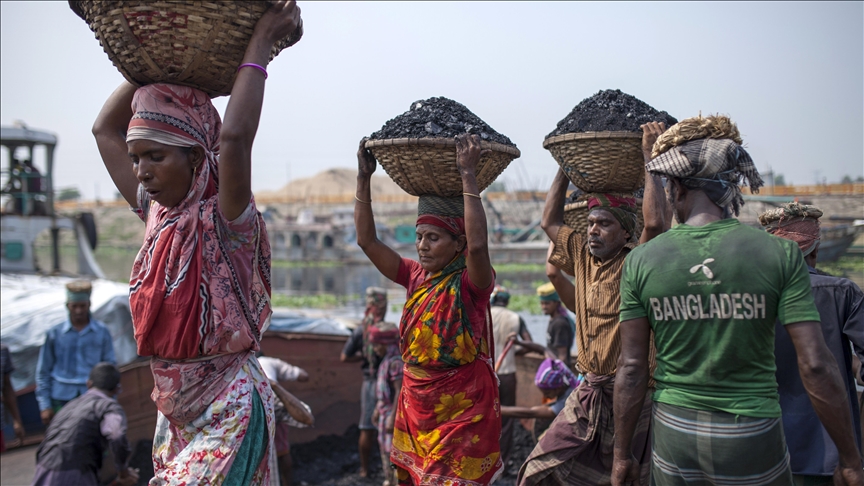
Among the reasons for relatively high poverty is the labour situation. There has been labour redundancy: The population in the age-group above 15 grew at 1.4-1.6% per annum in the 15-year period from 2004-05 to 2019-20, but the workforce grew at about 0.6% annually. This implies that instead of economic growth pulling-in more workers it has pushed them out. Labour redundancy is estimated to be in the range 120-125 million, which is also reflected in the large number of young people who are neither in the labour force nor in education or training.
Some 39 million workers left agriculture between 2004-05 and 2019-20, and most joined low paying jobs in the construction sector. The main push-out of workers has happened among women workers: there were some 18.2 million fewer workers in 2018-19 compared to 2004-05, i.e. almost 16% less. This is in contravention to to SDG 5.
The economic liberalisation in the mid-1980s and beyond was not accompanied by significant investments in human development and skills resulting in stagnation or slow growth of many labour-intensive industries. Labour redundancy/rejection is among the worst forms of exclusion and is in contravention to SDGs 5, 8 and 10.
There are multiple types of schools in India. They offer education that differs in quality, content and even access. They teach in varied languages of instruction, analysis and orientation. Some do not have playgrounds, many are under-staffed, yet others are poorly staffed, a few do not have adequate buildings, teaching facilities, or extra-curricular activities. In contrast, some schools offer a wide range of activities like horse-riding, sports facilities, etc. Unicef finds that many children are not learning the basics of literacy and numeracy. The outcomes are evident in the job markets.
Out of the total number of schools, some 4/5th are only up to the primary level. Which means that, as one moves beyond the primary level, the number of schools reduces. The is a dropout in successive classes as children move up beyond the primary levels is also because of increased out-of-pocket expenses in classes beyond the primary school. The poor are de facto denied education – an indication of the perpetuation of inequality.
The government expenditures on the Health Sector are about 1% of the GDP – in developed countries this is 6-8%. Also, the large proportion of Health Services is in the private sector, which is expensive. Out of pocket expenses constitute some 70% of the total expenses that households incur on Health.
The lack of inclusion and access to adequate nutrition in the presence of surplus food, points to systemic issues that go beyond mere food availability. India’s score in the Global Hunger Index (scale is 0-100) is 29.1, which is serious. As in 2019-21, more people in the eastern states fell short of adequate nutrition. Infant and under-5 mortality fall as one moves up the wealth class and the proportion of women suffering from low BMI also reduce. These are indications of location/wealth/income inequality affecting health.
In conclusion, India needs to climb up the path of human development with increased expenditure on education and health and cheapening of services. Promotion of decentralised and labour-intensive industrialisation is also the need of the hour.