
Do education and skill development affect the transition from ‘good-enough’ job to ‘decent’ job?

Majority of studies conducted on decent job primarily focused on the demand side issues. However, there is a need to explore the supply side issues as the composition of labor supply itself can be a determining factor in the status of decent job. This article follows the definitions
Export diversification – Myths and realities

Export diversification has been an important policy agenda in many of the developing countries. It is commonly viewed that export diversification is a necessary condition for the sustained and long-term growth of the economy and job creation
Why do countries differ in export diversification?

In the literature of export-growth linkages, the issue of export diversification draws a considerable interest in reducing risks associated with adverse and volatile terms of trade, slow productivity growth or relatively low-value addition in the global value chain. Diversification
Demystifying non-tariff barriers in South Asia

In the initial years of SAARC in the 1980s, the popular hypothesis for the reason behind limited intra-regional trade was the prevailing high tariff rate among the member countries. High tariff rates have come down substantially over the years since the formation of SAARC,
Towards a new regime of regional integration in South Asia

There are strong arguments for deeper regional economic integration in South Asia. It is believed to have the potential for generating significant intra-regional trade and welfare gains for the countries involved. Deeper regional integration is supposed to provide countries
Bangladesh needs a new investment regime

Looking at the trend in the investment-GDP ratio since 1979-80, we can suggest four different investment regimes in Bangladesh. The first regime (1979-80 to 1989-90) is characterized by a low level of investment-GDP ratio with an annual average of 16.5 percent
Our garment industry at a crossroad

Manufacturing is now an overwhelmingly salient component of Bangladesh’s export composition, thanks largely to the rapid expansion of the garment industry. From a small base of only around US$ 32 million in 1984, garment exports have grown to around US$ 25 billion by 2014, accounting
From ‘good-enough’ jobs to ‘decent’ jobs

Though there are many views on ‘inclusive growth’, the key consensus is that inclusive growth is a growth process that reduces poverty, inequality, and social exclusion and promotes ‘decent’ jobs and economic and social
The Manufacturing Sector in Bangladesh: Is it a sustained driver of economic growth and employment creation?

The Bangladesh economy has witnessed significant structural changes over the last four decades. The share of agriculture in GDP has declined while the relative significance of industry and services sectors has increased substantially. Over the past two decades
How costly are the impacts of climate change in Bangladesh?
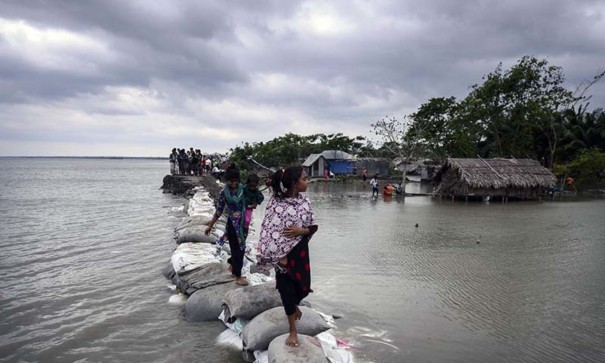
Bangladesh is highly vulnerable to climate change impacts because of its vast low-lying areas, large coastal population, high population density, inadequate infrastructure, and high dependence on natural resources. For Bangladesh, climate change manifests


