Commentary
Innovative, independent, peer-reviewed. Explore the latest economic research and policy proposals from SANEM’s global development experts.
Economic Impacts of AMR
SANEM set out to estimate the future economic burden of antimicrobial resistance (AMR) by 2050. We looked at the impact of AMR on four sectors of the economy: health system, the labour market, tourism, and domestic hospitality. We also estimated the return on investment of several interventions to prevent AMR.
Subscribe today to receive SANEM’s latest newsletters and topic updates.
All Commentary
Filter
7 posts found
Content Type
Time Frame
- Blog Post
How do public education and health spending reduce poverty?
- Dr Selim Raihan
- Dec 4, 2017
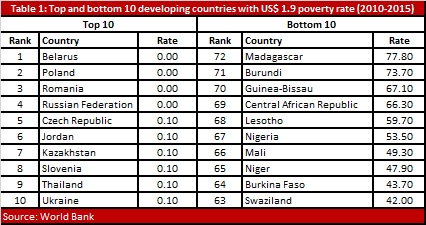
an recent decades, the developing world has made important progress in reducing extreme poverty. The data from the World Bank shows that the number of people living below the international poverty line of US$ 1.9 a day dwindled down from 1.85 billion people in 1990 to 768.5 million [....]
- Blog Post
Food insecurity: How concerned should we be?
- Dr Selim Raihan
- May 6, 2024
The persistent high inflationary pressures in Bangladesh over the last two years have heightened concerns regarding the erosion of food security among a large section of the population of the country. Food security in Bangladesh is of paramount importance due to the country’s [....]
- Blog Post
Poverty research in Bangladesh: Issues and concerns
- Dr Selim Raihan
- Jun 3, 2024
Research on poverty in Bangladesh requires answers to four fundamental questions: First, what are the poverty trends in Bangladesh? Do the official figures present a true picture? Second, how do different shocks (economic and noneconomic) affect poverty and vulnerability? [....]
- Blog Post
Shattered Illusions: The Harsh Truth Behind Bangladesh’s Poverty Reversal
- Dr Selim Raihan
- Oct 1, 2025
The recent finding from the survey by the Power and Participation Research Center (PPRC) that over one in four people in Bangladesh now live in poverty, a sharp increase from just a few years ago, reported by the Bangladesh Bureau of Statistics (BBS), should serve as a sobering alarm bell. This is not simply [....]