Commentary
Innovative, independent, peer-reviewed. Explore the latest economic research and policy proposals from SANEM’s global development experts.
Economic Impacts of AMR
SANEM set out to estimate the future economic burden of antimicrobial resistance (AMR) by 2050. We looked at the impact of AMR on four sectors of the economy: health system, the labour market, tourism, and domestic hospitality. We also estimated the return on investment of several interventions to prevent AMR.
Subscribe today to receive SANEM’s latest newsletters and topic updates.
All Commentary
Filter
106 posts found
Content Type
Time Frame
- Blog Post
Dynamics of economic growth in Bangladesh
- Dr Selim Raihan, Wahid Ferdous Ibon
- Aug 5, 2016
Rapid and sustained economic growth is very critical for Bangladesh’s economy in its way towards a middle-income country. In this article, we have investigated the major determinants of economic growth in Bangladesh using time series data for 44 years (1972-2015). We start with a production [....]
- Blog Post
Does employment status matter for the wellbeing of rural households in Bangladesh?
- Dr Selim Raihan
- Sep 2, 2016
In rural Bangladesh, a great challenge is to tackle the low pay, poor-quality jobs that are unrecognized and unprotected by law, widespread underemployment, the absence of rights at work, inadequate social protection, and the lack of representative voice [....]
- Blog Post
Cross-country differences in income inequality: Where do South Asian countries stand?
- Dr Selim Raihan
- Sep 10, 2016
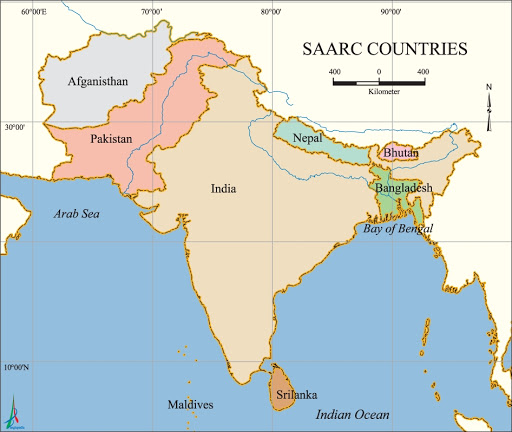
In recent years, there has been a growing interest among general people, researchers and policymakers in income inequality, its causes, and its effects. The most popular index of income inequality is the ‘Gini index’ which measures the inequality among levels of income [....]
- Blog Post
Can Bangladesh continue to grow without ‘good governance’?
- Dr Selim Raihan
- Jun 3, 2017
if we look at the growth pattern of Bangladesh from 1990, we discover two specific characteristics: first, the growth rate has been on the rise, and second, it is less volatile compared to those of many other countries (for example, India, Vietnam, Cambodia, China [....]
- Blog Post
How do public education and health spending reduce poverty?
- Dr Selim Raihan
- Dec 4, 2017
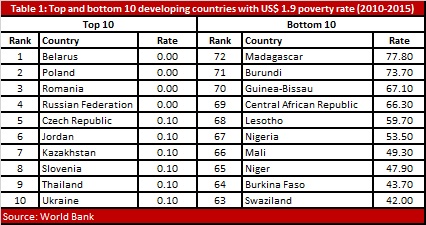
an recent decades, the developing world has made important progress in reducing extreme poverty. The data from the World Bank shows that the number of people living below the international poverty line of US$ 1.9 a day dwindled down from 1.85 billion people in 1990 to 768.5 million [....]