Commentary
Innovative, independent, peer-reviewed. Explore the latest economic research and policy proposals from SANEM’s global development experts.
Economic Impacts of AMR
SANEM set out to estimate the future economic burden of antimicrobial resistance (AMR) by 2050. We looked at the impact of AMR on four sectors of the economy: health system, the labour market, tourism, and domestic hospitality. We also estimated the return on investment of several interventions to prevent AMR.
Subscribe today to receive SANEM’s latest newsletters and topic updates.
All Commentary
Filter
48 posts found
Content Type
Time Frame
- Blog Post
How to tackle ‘entitlement failure’ in infrastructure?
- Dr Selim Raihan
- Feb 1, 2016
In the discourse on infrastructure and economic growth, the dominant area of discussion is on the quantity and quality of infrastructure and how countries differ in these respects. While most of the countries emphasize a lot on investing in raising the quantity (and quality) of infrastructure [....]
- Blog Post
How does improvement in infrastructure affect economic growth?
- Dr Selim Raihan, Sunera Saba Khan
- Mar 1, 2016
Infrastructure plays a decisive role in stimulating long-run economic growth. An increase in the level of infrastructure stock directly helps in reducing poverty and accelerating productivity. Infrastructure also contributes to the development process through the provision [....]
- Blog Post
Does employment status matter for the wellbeing of rural households in Bangladesh?
- Dr Selim Raihan
- Sep 2, 2016
In rural Bangladesh, a great challenge is to tackle the low pay, poor-quality jobs that are unrecognized and unprotected by law, widespread underemployment, the absence of rights at work, inadequate social protection, and the lack of representative voice [....]
- Blog Post
How do public education and health spending reduce poverty?
- Dr Selim Raihan
- Dec 4, 2017
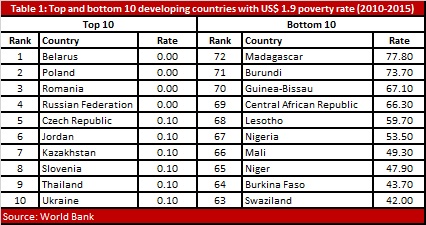
an recent decades, the developing world has made important progress in reducing extreme poverty. The data from the World Bank shows that the number of people living below the international poverty line of US$ 1.9 a day dwindled down from 1.85 billion people in 1990 to 768.5 million [....]