Commentary
Innovative, independent, peer-reviewed. Explore the latest economic research and policy proposals from SANEM’s global development experts.
Economic Impacts of AMR
SANEM set out to estimate the future economic burden of antimicrobial resistance (AMR) by 2050. We looked at the impact of AMR on four sectors of the economy: health system, the labour market, tourism, and domestic hospitality. We also estimated the return on investment of several interventions to prevent AMR.
Subscribe today to receive SANEM’s latest newsletters and topic updates.
All Commentary
Filter
14 posts found
Content Type
Time Frame
- Blog Post
Doing Business versus the real Business Environment in Indian States
- Sabyasachi Kar, Sudeepto Roy
- Dec 5, 2018
The World Bank’s Doing Business (DB) rankings for 2019 are out and India has again made a jump to 77th position from 100th in 2018, which too was 30 notches up from 130th in 2017. These rankings are based on the country’s performance in several areas, like [....]
- Blog Post
Export diversification: Pathway to sustainable growth
- Mir Ashrafun Nahar
- Mar 16, 2020
Export diversification is a simple and sound prescription for developing countries since it contributes to higher per capita income growth and potential structural change as well as assists in overcoming the predicament of economic slowdown [....]
- Blog Post
Trade logistics: A South Asian perspective
- Farhan Khan, Md Tuhin Ahmed
- Mar 16, 2020
Trade logistics is often considered a fundamental building block of trade and economic development. The term trade logistics usually encompasses a cluster of vital activities for trade including transportation, warehousing, cargo consolidation, border management [....]
- Blog Post
Gravity of rural-urban migration and its impact on Bangladesh
- Mir Ashrafun Nahar
- 18 May, 2020
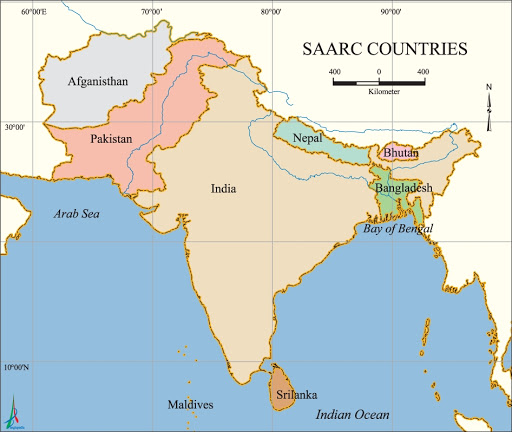
Moreover, Bangladesh is a densely-populated country with a population of 161.36 million in 2018 against 103.17 million in 1990. Population growth was showing a decreasing trend as it reached 1.05 percent by 2018 though it was 2.43 percent in 1990. In such a context [....]
- Blog Post
Bangladesh’s energy sector: Short-term success vs long-term sustainability
- Md Tuhin Ahmed, Sayed Arafat Zubayer
- Mar 23, 2023
Bangladesh’s existing energy and power sector relies heavily on imported primary fuel. More than half of the country’s electricity is generated through domestic natural gas and imported liquefied natural gas (LNG). The international primary energy market is becoming increasingly volatile, particularly as a result of the Russia-Ukraine war. [....]